
Side-Entry Mixers from Nowak – Designed to Meet Your Toughest Mixing Challenges
Industrial mixing in large or deep tanks presents unique challenges, including uneven circulation and difficulty maintaining consistent flow. Energy efficiency, easy maintenance, and adaptable equipment are critical for managing cost-effective and reliable operations. Side-entry mixers are especially valuable for large tank mixing, where horizontal movement of fluid, control of sludge or solids, and easy access to the drive components are crucial.
Design and Functionality
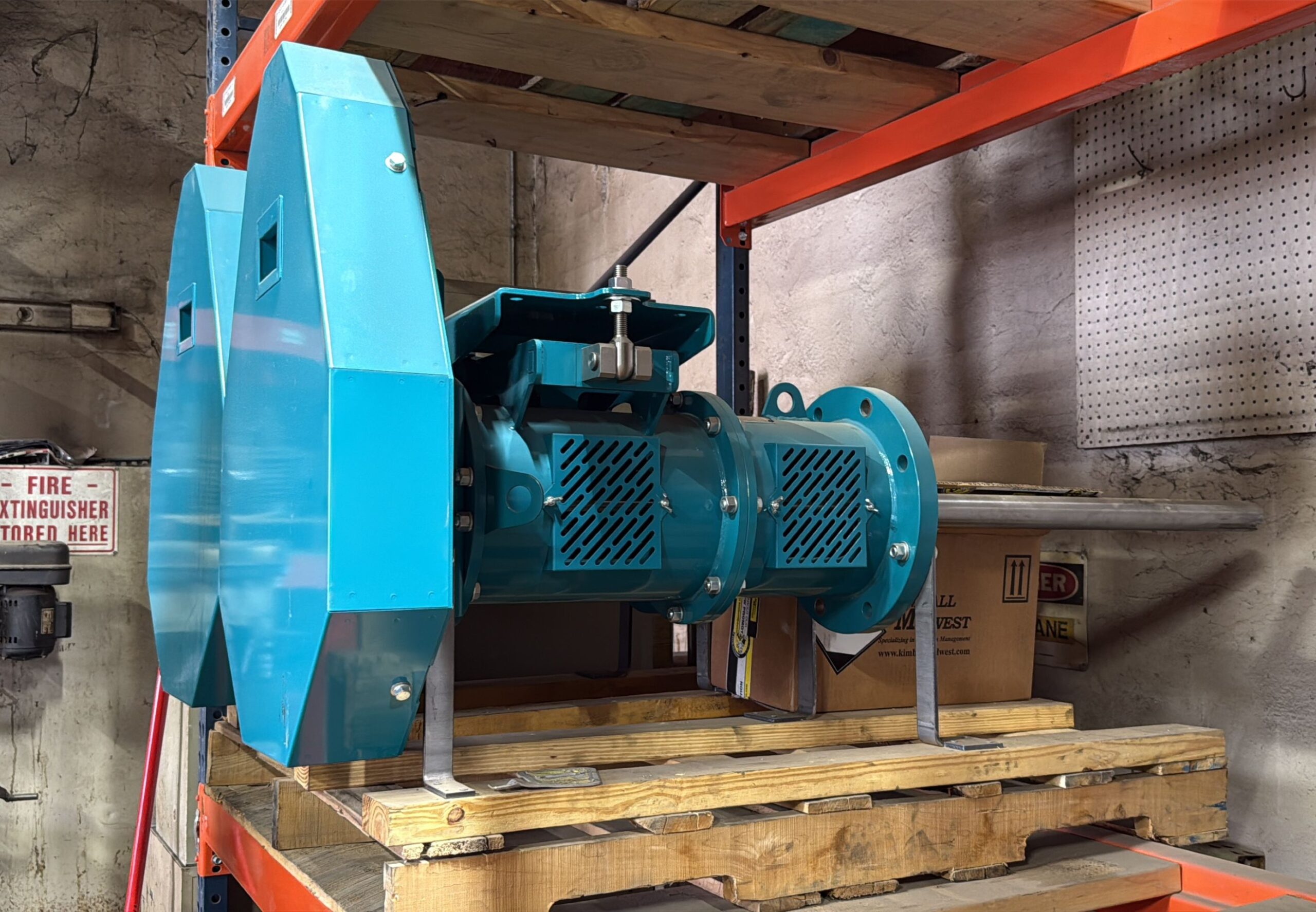
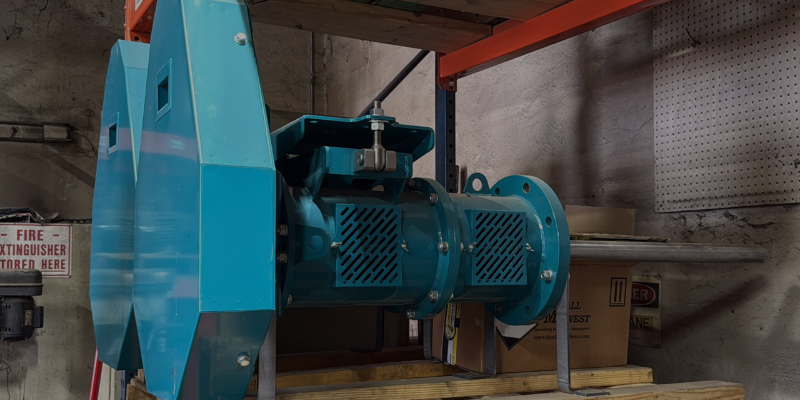
Nowak Industrial Side Entry Tank Mixer
A side-entry mixer is mounted through the main outer wall or body of the storage tank, known as the tank shell. The motor is outside the tank, and a horizontal shaft carrying an impeller is inside the tank. When running, the impeller throws a high-velocity stream of liquid across the tank, which then turns and circulates back to create a continuous flow that efficiently sweeps the floor and walls of the tank.
The ability to mount on the side of the tank makes these types of mixers well-suited for large storage tanks, where top-entry mixers may require extended shafts or complex support structures. Top-entry mixers primarily turn the liquid over vertically from the top toward the bottom. This is ideal for tanks that are tall and relatively narrow. By contrast, side-entry mixers drive the fluid sideways and push it lengthwise through the tank so that circulation can reach distant areas in vessels that are long, wide, or low-profiled. In these types of tanks, the vertical flow created by a top-entry mixer would weaken before it could effectively mix the whole volume.
As the flow coming off a side-entry impeller sweeps across the tank, runs across the floor, and recirculates, it thoroughly scours the areas that would otherwise collect deposits. Complete tank coverage keeps all of the material in motion and prevents those dead zones where solids, sludges, or temperature gradients could develop. For additional control, the mixer can be mounted on a swivel or indexing device so that operators can periodically adjust the angle of the jet. This gives them the power to target different areas of the tank to progressively disrupt any stagnant pockets and turn them into active circulation zones.
Operation Advantages
Side-entry mixers shine in applications where tank geometry and access make top-entry equipment inefficient or impractical. They can provide better uniformity with fewer dead spots in wide or long tanks, as well as help maintain product quality by continuously mixing out stratification and keeping sludges or solids moving. As an added perk, side-entry mixers are the ideal choice when it comes to retrofitting existing tanks without undergoing extensive modifications, and they also allow for easier servicing since the drive is mounted on the shell at an accessible height.
From an energy standpoint, a top-entry mixer will often be more power-efficient in an ideal tall, baffled tank. However, on very large or flat tanks, a set of appropriately-sized side-entry mixers can deliver the required circulation without the structural complexity and shaft length a comparable top-entry design would need.
Side-entry mixers are commonly used to prevent layering of product by temperature or density in storage tanks, which would otherwise lead to inconsistent draws and quality issues. These mixers also help stop water and sludge from settling on the bottom of crude and fuel tanks, keep solids suspended in wastewater and slurry services, and provide effective mixing where roof limitations or floating roofs rule out large top-mounted agitators.
Maintenance and Installation
Because side-entry mixers are mounted on the side of the tank, technicians can perform inspections, repairs, and adjustments from platforms or grades without having to deal with roof penetrations or tall structures. Many side-entry mixer systems are designed with shutoff arrangements or similar features that allow for seal work or the servicing of certain components without having to drain the entire tank. This significantly cuts down operational interruptions and keeps the production running smoothly.
In addition, multiple smaller mixers can be added, relocated, or swapped on the tank shell over time, giving more flexibility to adapt to changing process conditions or to build in redundancy without redesigning the tank roof.
Industrial Applications
Side-entry mixer designs are generally used for low- to medium-viscosity fluids where the key objective is bulk movement and blending rather than extreme shear. Typical examples include crude oils and refined hydrocarbons, water-based liquids with suspended solids in wastewater or industrial effluent, mineral slurries, and large-volume food, beverage, or agricultural formulations that need gentle but continuous mixing to remain uniform.
Thick products or materials requiring intensive dispersion or emulsification will generally need a top-entry mixer or a dedicated high-shear device.
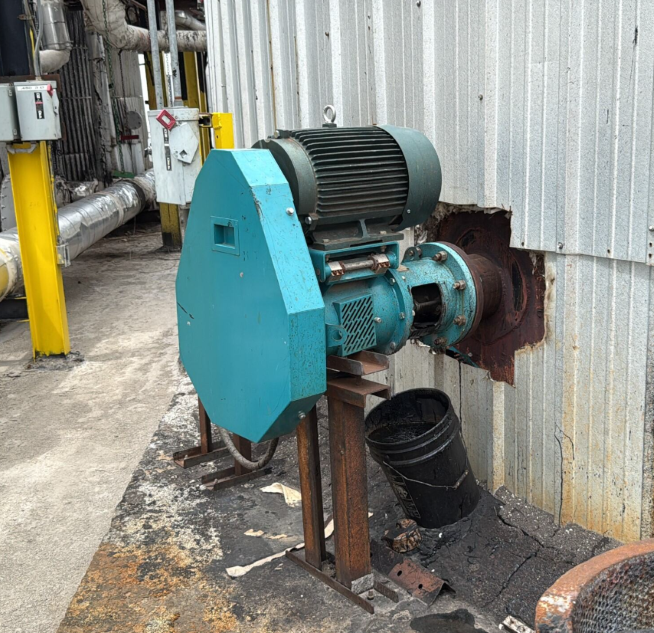
Nowak Side Entry Mixer in use at Vance Brothers asphalt production plant in Kansas City.
Side-entry mixers tend to be favored by industries that utilize large storage or process tanks. The main concerns of these operators surround stratification, sludge buildup, or solids settling. Side-entry mixers are especially common in oil and gas terminals, petrochemical and chemical plants, water and wastewater facilities, mining and mineral processing, and large food, beverage, and agrochemical installations that rely on big tanks to hold or blend product over time.
Asphalt production is another industry that benefits greatly from side-entry mixer applications. Nowak has provided Midwest-based Vance Brothers Inc. with top-quality, reliable side-entry mixers for 10+ years. The company mounts the side-entry mixers on the sides of their massive vertical storage tanks. These play a crucial role in maintaining Vance Brothers’ inventory quality. According to Vance Brothers Maintenance Supervisor, Chris Campbell:
“Nowak’s products are superior, and we have never had a failure with any of their mixers. They make quality products that we depend on at all 8 of our asphalt plants across the Midwest.”
