
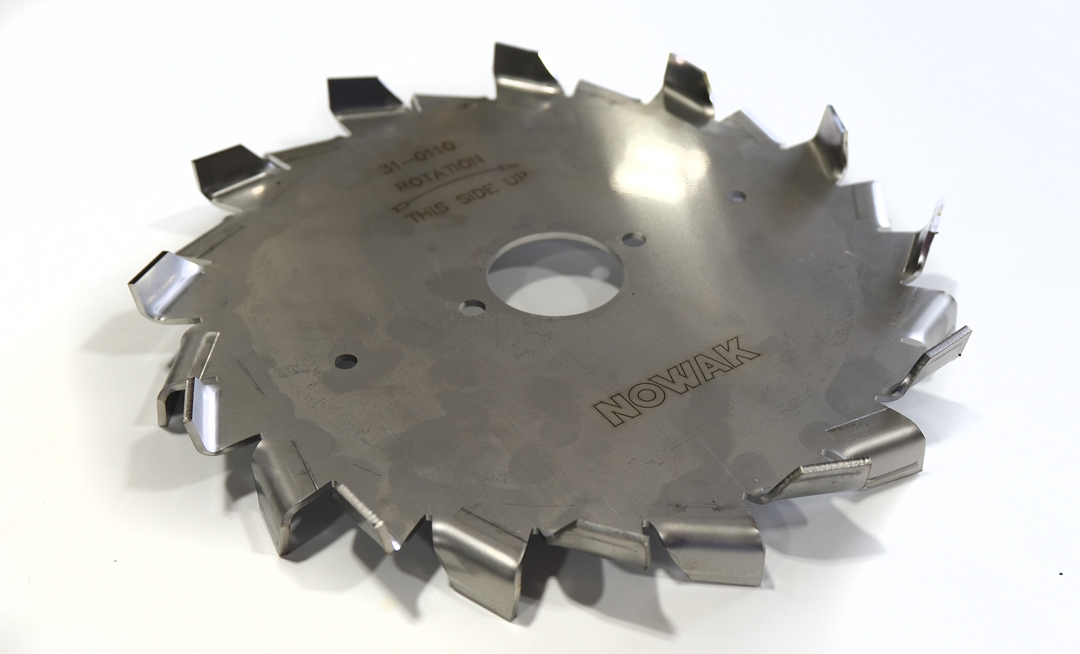
Dispersion blades are high-shear mixing tools designed to break down particles and evenly blend materials in industrial processes across various industries, such as agriculture, chemical manufacturing, paint, coatings, adhesives, cosmetics, and more. Sometimes dispersion blades are referred to as sawtooth blades, and many industries rely on them for reliable, high-quality mixing results.
How do dispersion blades work?
Dispersion blades operate at high speeds to perform key functions within a mixing tank.
These blades are used for particle size reduction, emulsification, powder incorporation, and full product homogenization. Unlike standard mixers, dispersion blades exert strong mechanical shear forces. This action breaks apart clumps (known as deagglomeration), creates a consistent flow, and ensures all solids and liquids are effectively dispersed.
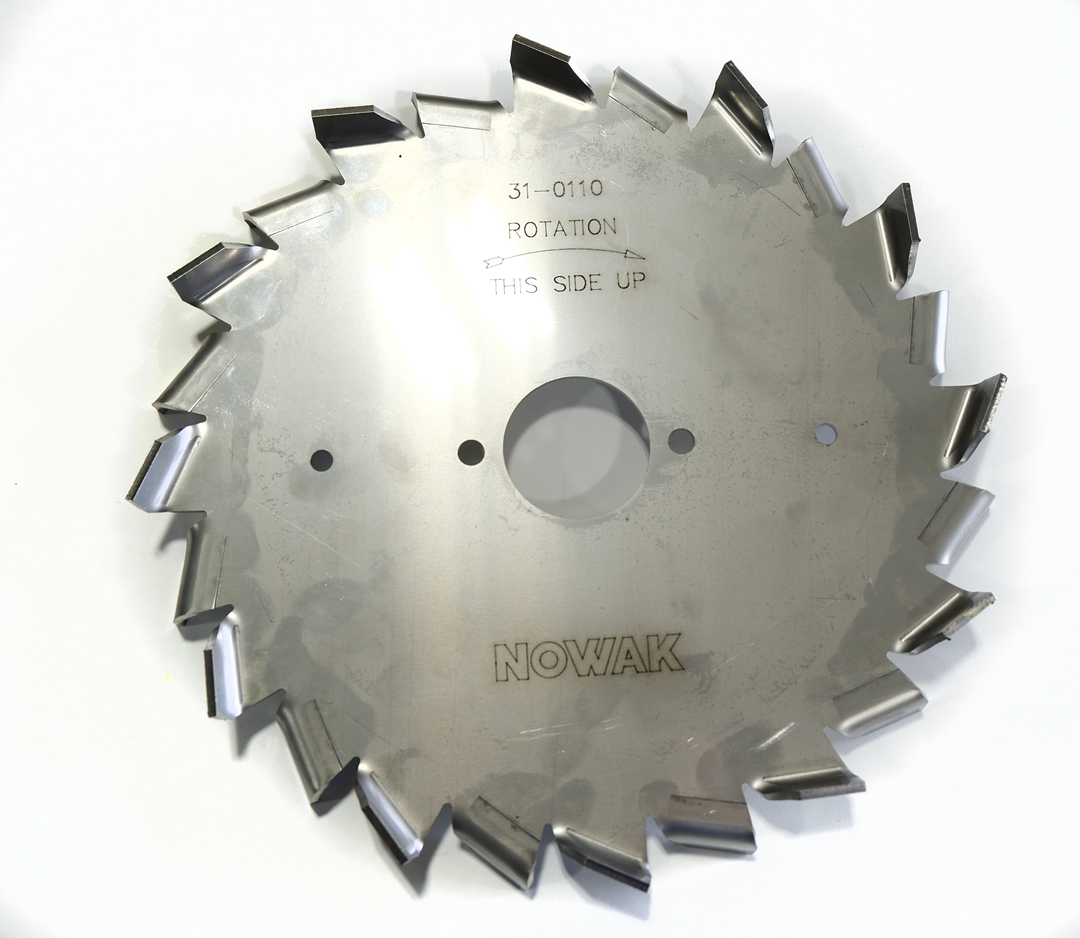
Nowak Industrial Products Stainless Steel Dispersion Blade
The teeth of the dispersion blade draw ingredients into a central vortex. This forces material through narrow zones, where they are then subjected to strong mechanical forces. Agglomerates are broken apart, and solids are efficiently suspended and dispersed throughout the liquid. The intense force of dispersion blades results in homogenous blends of fine, consistently-sized particles.
What is the difference between laminar flow and turbulent flow?
Turbulent flow is chaotic and creates unpredictable mixing, while laminar flow moves in smooth, parallel layers with minimal disruption to mixing.
Dispersion blades create laminar flow, where fluid layers move parallel to each other in such a way that creates minimal turbulence. This ensures predictable particle movement toward the trailing edge of the blade. This helps prevent localized hotspots or excessive mechanical stress and produces even deagglomeration, homogenization, and particle size reduction.
Turbulent flow is characterized by uneven motion, which can lead to uneven shear, unpredictable particle movement, and excessive mechanical energy. Turbulent flow risks damaging shear-sensitive materials and allows air bubbles into the mixture, which can lead to weakened product quality and consistency.
What are the most common types of dispersion blades?
High-shear, rectangle-tooth, and high-vane dispersion blades are the most commonly used styles.
High-shear blades are engineered to generate intense mechanical force – known as shear. When rotating at high speeds, the blade quickly and efficiently breaks apart agglomerates and solid particles to distribute them evenly throughout the mixture. The geometry of high-shear dispersion blades creates smooth, consistent blends with fine particle breakdown. This is crucial in applications like paint, coatings, and adhesives.
Rectangle-tooth blades have evenly spaced rectangular teeth arranged along the perimeter. This blade style delivers a strong pumping effect and generates moderate levels of shear. Rectangle-tooth dispersion blades work well for heavier or more viscous materials, where circulation is just as important as the breaking up of clumps.
High-vane blades are designed for strong pumping action. They are an especially effective blade style for thixotropic materials that require constant movement.

High-Shear Dispersion Blade
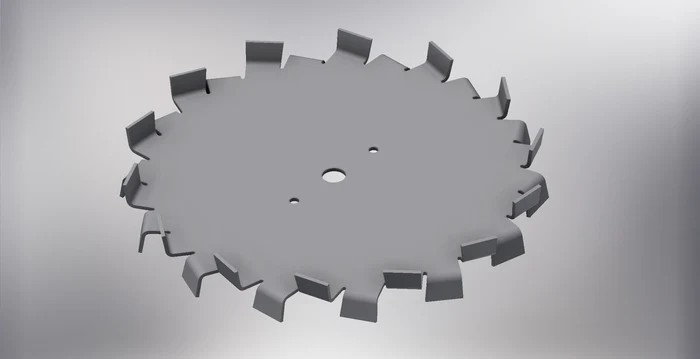
Rectangle-Tooth Dispersion Blade
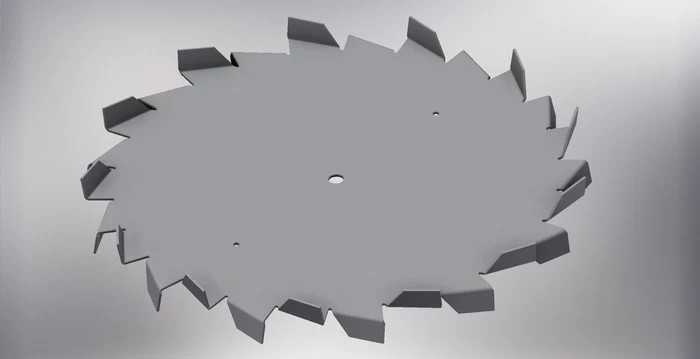
High-Vane Dispersion Blade
Why is dispersion blade size important?
Proper blade sizing improves mixing efficiency and overall process effectiveness.
Using the correct blade size ensures that an optimal mixing vortex is achieved. This is critical for delivering effective particle breakdown for the volume and viscosity of the material. Industry best practice suggests blade selection should be guided by the size of the tank, with blades measuring roughly one-third the diameter. Selecting a blade that is either too small or too large can result in inefficient mixing and lead to wasted energy and unsatisfactory dispersion.
What material are dispersion blades typically made from?
The majority of dispersion blades used for industrial purposes today are manufactured from 304 or 316 stainless steel.
Both stainless steel 304 and stainless steel 316 are durable and corrosion-resistant. Both offer distinct advantages depending on the operating environment and the type of material being processed.
304 stainless steel is the standard choice for most mixing applications. 316 stainless steel offers more corrosion resistance than 304 stainless steel. Because of this, 316 stainless steel is typically used for acidic, saline, or sulfur-rich mixtures, such as those found in fertilizers, specialty chemicals, and certain food products.
Nowak’s specialized equipment can manufacture both 304 and 316 stainless steel dispersion blades in a wide variety of sizes and blade configurations.
How do you select the right dispersion blade?
Selecting the right dispersion blade depends on key process factors that affect mixing performance and product quality.
The first consideration is material viscosity. Larger blades are required for thicker, more viscous materials in order to generate enough force for proper movement and dispersion. The blade must also be proportionally matched to the size of the tank where mixing is taking place. Finally, the level of shear needed for adequate circulation plays a role in determining the right type of dispersion blade. Some processes demand more particle breakup, while others will need more effective bulk movement.
What advantages do Nowak dispersion blades offer over OEM dispersion blades?
Nowak Industrial Products saves operators time and money with competitive blade pricing, faster lead times, and broader size availability.
Many businesses often just reorder replacement dispersion blades from the original equipment manufacturer, yet this approach can lead to several operational challenges:
- Higher Costs – The cost of replacement dispersion blades can quickly add up, especially for industries that are using the blades to mix highly abrasive materials.
- Slow Lead Times – OEM dispersion blades, particularly those in less common sizes, often extend manufacturing and shipping timelines and disrupt tight production schedules or cause significant production downtime.
- Limited Availability – Certain blade sizes and configurations are not always readily available, which can make them difficult to source quickly and cost-effectively.
How should dispersion blades be maintained for optimal performance?
To ensure longevity and consistent results:
- Inspect blades regularly for wear, corrosion, cracks, or dulled teeth.
- Clean blades regularly to prevent material from building up and hardening on the blade.
- Properly assemble and handle dispersion blades to prevent accidental damage.
- Maintain motors and mixers so that blades are not subjected to excessive vibration.
