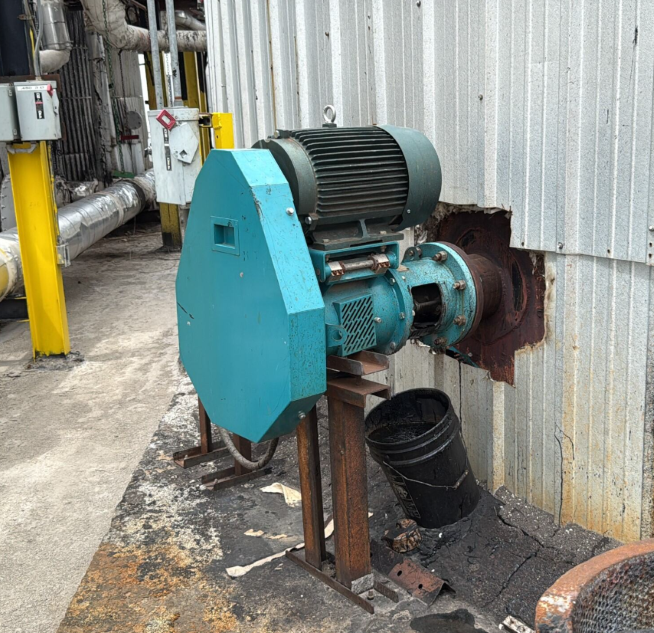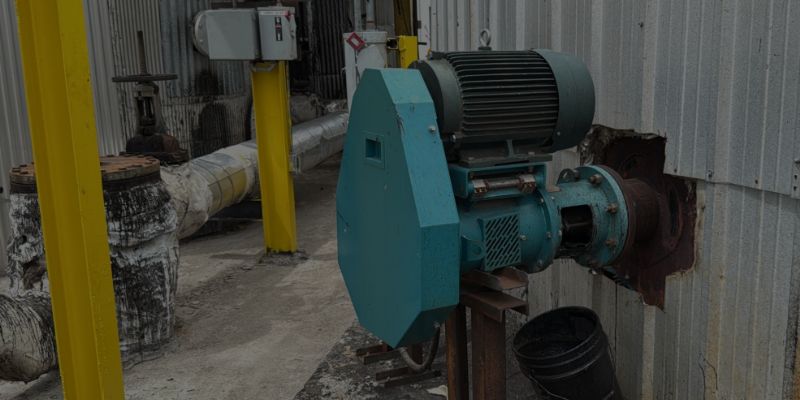
Side-entry mixers are designed to tackle the unique challenges of large tank industrial mixing processes, such as uneven circulation or irregular flow patterns. For tanks of a particular geometry (deep, large, wide), side-entry mixers are an optimized solution that is easier to maintain and adaptable to a diverse range of industrial applications.
How do side-entry mixers work?
Side-entry mixers are mounted to the side of the tank and use a horizontal shaft and impeller to throw a high-velocity stream of liquid across the tank to create an efficient and continuous flow.
Side-entry mixers work well in large or wide tanks because they are installed through the tank shell (main outer wall) and drive fluid sideways. The impeller pushes the material horizontally through the tank, generating a flow pattern that effectively reaches the distant areas of the tank that would otherwise be dead zones. This makes side-entry mixers a practical choice for applications where blending, heat transfer, suspension, and uniformity of product are of concern in high-volume storage or process tanks.
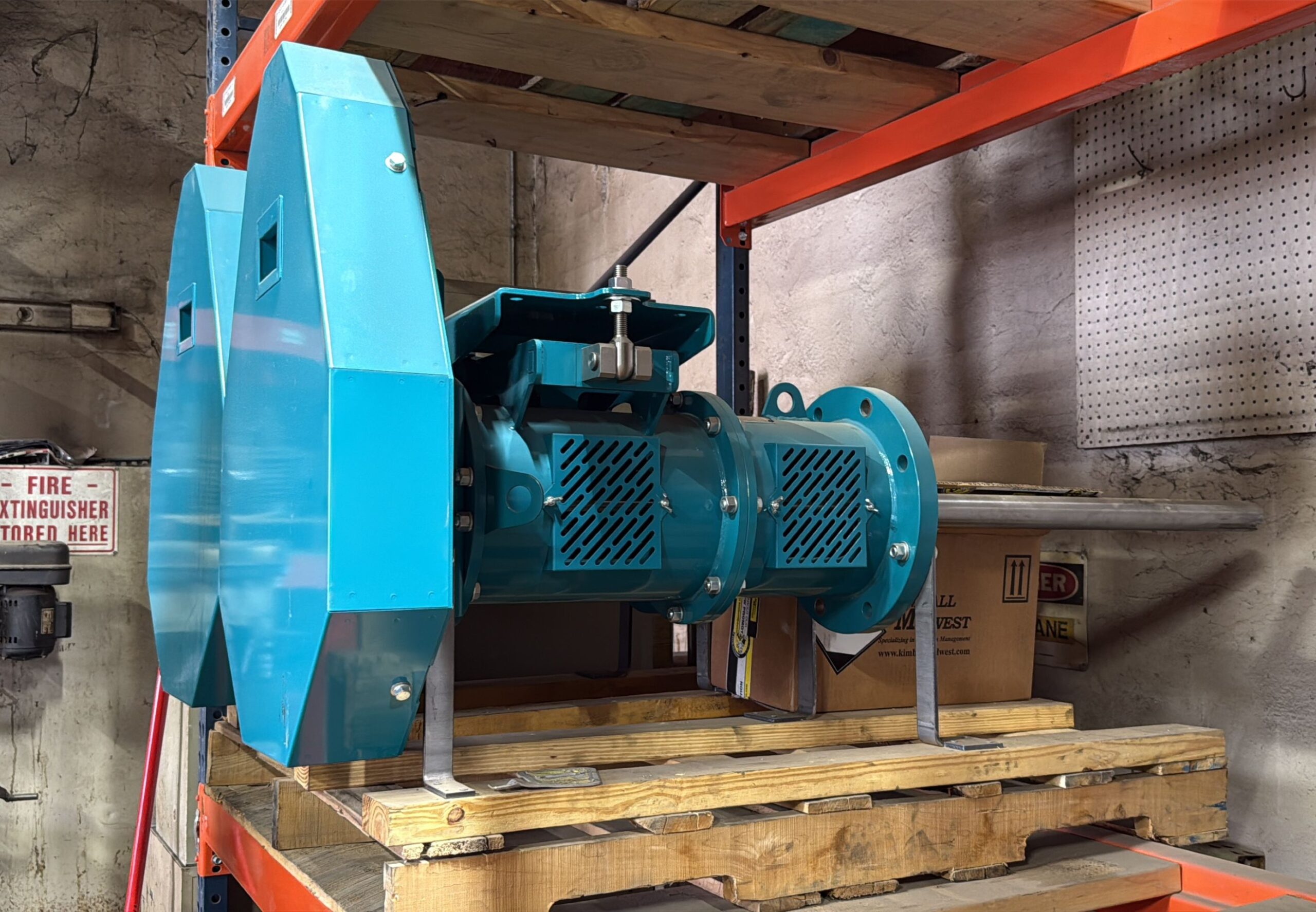
Nowak Industrial Products Side Entry Tank Mixer
The horizontal flow coming off the side-entry mixer’s shaft and impeller sweeps across the tank in its entirety, running across the floor and scouring any spots that would otherwise collect deposits. Complete tank coverage is key, as this prevents dead zones. For additional control, side-entry mixers can be mounted on a swivel or indexing device. This allows operators to periodically adjust the angle of the jet to target different areas of the tank.
What advantages do side-entry mixers offer over top-entry mixers?
Tank geometry and top access can make top-entry mixers an inefficient or impossible option for tank mixing. Side-entry mixers are the solution to these industrial mixing scenarios, providing installation flexibility, effective mixing, and ease of maintenance.
For tanks that are not tall or narrow, side-entry mixers offer better uniformity and eliminate dead zones. This is critical for maintaining product quality, especially when continuous mixing is needed to keep sludges and solids moving. In contrast, top-entry mixers pull material upward and downward inside the tank, which is effective in tall, narrow tanks, but less efficient in tanks where the liquid must travel greater horizontal distances. Side-entry mixers also excel at preventing the layering of product by either temperature or density in storage tanks to help to prevent inconsistent draws and quality issues.
Furthermore, side-entry mixers are the ideal choice when it comes to retrofitting an existing tank. Instead of undergoing extensive modifications or building new structures to hold the mixer, side-entry mixers can easily be installed through the tank wall. This also allows for easier servicing as the motor is at an accessible height.
How are side-entry mixers maintained?
One of the biggest advantages of side-entry mixers is their accessible and maintenance-friendly design.
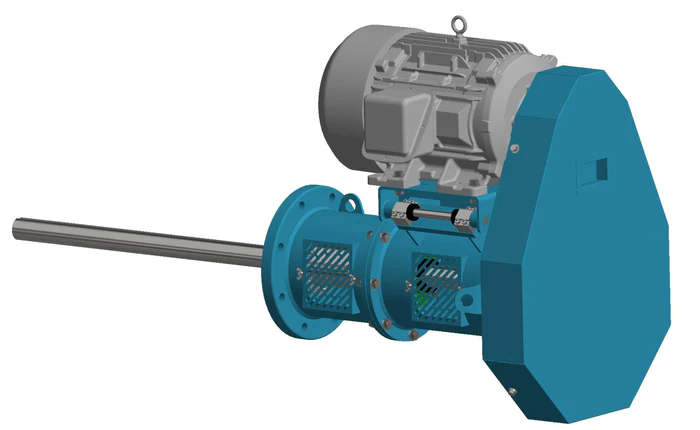
Since side-entry mixers are mounted directly onto the side of the tank instead of on the roof of the tank, technicians can inspect, service, and adjust the equipment either on accessible platforms or from ground level. Maintenance can often be completed without the need for cranes, scaffolding, or specialized access equipment, helping to simply service procedures, reduce labor costs, and improve plant safety. Easier access also encourages more consistent preventative maintenance, which helps extend the lifespan of equipment and boost reliability.
Side-entry mixers are also engineered with specialized shutoff devices and seals that allow operators to safely service the mixer or its components without having to drain the entire tank. Avoiding the need to completely drain the tank significantly reduces operational downtime and minimizes disruptions to production schedules.
Are side-entry mixers easier to install than top-entry mixers?
For large tank applications, side-entry mixers can be easier and more cost-effective to install than their top-entry counterparts.
Side-entry mixers are mounted through the tank wall, so operators do not need long shafts or reinforced roof supports. This makes side-entry mixers especially valuable for retrofitting existing tanks where roof limitations, floating roofs, or roof access make a top-entry mixer impractical.
Side-entry mixers also offer a lot of flexibility to operators with specific mixing requirements. Multiple smaller side-entry mixers can be installed around the tank to improve circulation or target specific mixing zones. Mixers can be repositioned, upgraded, or expanded as processes evolve over time.
What industrial applications are side-entry mixers used for?
Side-entry mixers are typically used for low- to medium-viscosity fluids where the objective is bulk movement over extreme-shear blending.
Side-entry mixers are designed for large-volume continuous mixing applications. Side-entry mixers are favored by industries that utilize large storage tanks, such as oil and gas terminals, petrochemical plants, chemical plants, water and wastewater facilities, mining and mineral processing, and large food, beverage, and agrochemical installations. In comparison, top-entry mixers are better suited for applications with smaller, taller vessels where the goal is precision mixing in a contained and purpose-built environment, such as food process tanks and chemical batch kettles. While top-entry mixers can be configured to generate high-shear mixing forces to break down particles, they are not designed to handle the scale or geometry of tanks commonly used for oil terminals, petrochemical storage, and mining installations, where bulk movement and thorough circulation are the goal.